Listening While Reading
How the ear, eye and mind collaborate to strengthen reading and comprehension.


Research in the School of Languages, Literatures and Cultures is interdisciplinary and vibrant.
Faculty and graduate students pursue research in numerous languages and programs.
Read More about The Invention of the Eyewitness. Witnessing and Testimony in Early Modern France
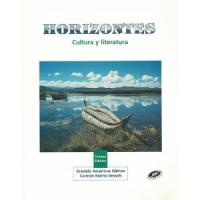
This book introduces the reader to the Spanish-speaking world through authentic, interesting and culturally rich reading selections. These readings have been chosen for their ability to communicate the way in which native speakers of Spanish think, act and feel in everyday situations ranging from the daily preoccupations of life in the city to the profound expression of myths and traditions. Many readings are preceded by helpful vocabulary lists, and each text is presented along with a targeted reading strategy. Activities before and after each reading selection maximize opportunities to increase and practice speaking skills.
Wiley; 3rd edition (January 15, 1997)
Marilyn Stone
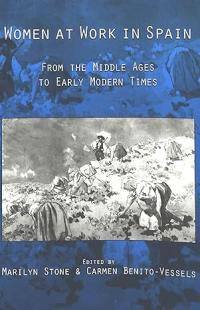
Women at Work in Spain offers evidence that women not only managed large estates and conducted the economic life of monasteries, but they also produced wealth through their labor as migrant and farm workers. These essays offer important data unearthed from archives in Castile, Leon, Toledo, and Seville, by documenting the contribution of women to the economic and cultural development of the Iberian Peninsula. These studies reveal that the survival of cultural traditions, the writing and illustrating of manuscripts, and the flowering of the printing industry were often in the hands of women.
Read More about Women at Work in Spain: From the Middle Ages to Early Modern Times
Este volumen se dedica al análisis de la Crónica abreviada y al estudio de la interpretación de la historia en El conde Lucanor. Los cuentos de carácter histórico de El conde Lucanor y el texto de la Crónica abreviada se basan en el mismo principio de composición narrativa: la abbreviatio. En los cuentos se puntualiza y se depura el texto referencial a fin de lograr la ejemplaridad a la que obliga el género literario de la colección; en la crónica, en cambio, Juan Manuel resume un texto referencial para destacar lo que es relevante para sí mismo y para su clan familiar. En ambas obras, Juan Manuel aúna el gusto por la experimentación literaria con el pragmatismo político y da lugar a una genuina interacción dialógica entre historia y ficción.
La Crónica abreviada demuestra el valor político literario de un texto que se elaboró fuera del patrocinio regio y que tenía aspiraciones monárquicas. Aunque Juan Manuel hizo amplio uso de lo imaginario en aras de la política en su Libro de las armas, la Crónica abreviada constituye el primer paso oficial en su reclamación monárquica.
![Entre el exilio y el interior: el "entresiglo" y Juan Ramón Jiménez. [Exile from within: the 'entresiglo' and Juan Ramón Jiménez]](/sites/default/files/styles/headshot/public/2021-07/9016397928_2880287a80_b.jpg?itok=oN3ASXum)
In this densely written, subtle, often insightful book, Naharro-Calderón takes on the task of localizing the various nuances of the socio-political condition that defined writers within and without Spain in the aftermath of the Spanish Civil War. He sets up Juan Ramón Jiménez as a central figure for readings of Antonio Machado, Jorge Guillén, Pedro Salinas, Pedro Garfias, Luis Cernuda, and Damaso Alonso that illuminate the weave of texts and intertexts in this period of Spanish poetry that formed the waning years of a Silver Age. The first quarter of the book is given over to a close discussion of the phenomenon of exile: "la pérdida del espacio de origen" (25). After an avalanche of notes, Naharro reaches an aporia (one of the words of postmodernist and deconstructionist discourse of which he is fond), and states resignedly that it is impossible to arrive at a satisfactory "delimitaci6n semantica" of exile but that it is "un fen6meno antiguo y actual conectado con el origen y futuro de la tierra" (58). He establishes his terminology: instead of posguerra, he prefers "'d6cadas de entresiglo' o 'entresiglo' a secas," and to avoid prolonging the myth of "exilio interior," for which he feels Paul Ilie is responsible, he proposes "literatura perseguida, censurada, resistente, o disidente" (93). The rest of the book is less polemical and makes many contributions to enlarging and refocusing the account of Spain's poetry from 1940 to 1960. Naharro's discussion of the fortunes of Juan Ram6n vis-a-vis Antonio Machado shows sharply how politics, ignorance, and censorship combined to create the leyenda blanca about the reclusive Juan Ram6n and the socially committed Machado. The two Andalusians had much in common: they were both anti-moderns concerned about the algebraic spirit of the new poetry; they were both neoromantics in their conception of the poet as prophet and both congenial to Heidegger's ideas about poetry; they both exalted el pueblo ("lo mejor de España," "la aristocracia congénita," Juan Ramón; "el hombre elemental y fundamental," "la aristocracia española está en el pueblo," Machado [172-77]). Machado broke with Ortega's notion of a governing elite, but Juan Ramón was less perturbed, claiming, however, in a discussion of T. S. Eliot's Notes toward a Definition of Culture, that elitism had nothing to do with class. Finally, both Juan Ramón and Machado believed that poets do not write for the masses. Given these parallels, plus Juan Ramón's early and unconditional allegiance to the Republic and his refusal to negotiate, through Juan Guerrero, with the censors, it is a sad lesson in the genesis of legends that Naharro tells. The vexing story of Juan Ramón's relation with younger poets, heretofore anecdotal in nature, Naharro recasts in the language of Harold Bloom: the anxiety of strong poets to overcome their predecessors, means of adaptation and veering away. Ansiedad is the proper word for all parties concerned. The case of Cernuda is enlightening: he attacked, was attacked, responded, then freed himself and went, especially via his dramatic monologues, his own strong way. In "El poeta," Cernuda presented the figure of Juan Ram6n as a precursor of his own poetic devotion, thereby purging himself of his own anxiety of influence. Naharro is right to point out that Cernuda was not an inadaptado, but rather one of the poets of his generation who got beyond solipsism in a convincing way. In a final chapter, Naharro adds to the cultural panorama of the entresiglo through a discussion of the contents of the Juan Guerrero letters in the Juan Ram6n Jimenez collection in Puerto Rico. As early as March 22, 1940, Guerrero was sharing information with Juan Ramón' on the whereabouts of individuals and Blecua began his pursuit of books by Guillén and Juan Ramón'. A copy of "Poeta en Nueva York" was in Blecua's hands in April 1945 (400). In short, although few readers had access to the works of the absent Spanish poets, many individual writers went to great length to acquire now canonical texts. The Guerrero correspondence is, indeed, an invaluable source for the intrahistoria of Spanish poetry. Naharro's book is rich in detail, overlapping on occasion, but thoughtprovoking and illuminating in its effort to go beyond generalizations and ponder cultural details.HOWARD YOUNG
Barcelona: Anthropos, 1994. 463 p. ISBN 84-7658-438-5
Like cartographers after the Treaty of Versailles, contemporary critics of picaresque literature are hard at work redrawing lines and polemicizing boundaries in an attempt to resolve prevailing problems of definition and method. To reevaluate this canon of texts and to address critical issues, a group of internationally renowned scholars gathered in April 1989 for a two-day conference, "The Picaresque: A Symposium on the Rogue' s Tale," which was held at the University of Maryland at College Park and sponsored by the Center for Renaissance and Baroque Studies in conjunction with the Department of Spanish and Portuguese. The essays in this volume grew out of this scholarly exchange and map out an unusually broad landscape of contemporary critical concern.
This volume represents the diversity of scholarly approaches to the study of picaresque and opens up new questions concerning the picaresque canon, especially regarding its criteria for the definition of parameters that include elements from classical antiquity to contemporary theory.
(January 1, 1994)
![Entre el exilio y el interior: el "entresiglo" y Juan Ramón Jiménez. [Exile from within: the 'entresiglo' and Juan Ramón Jiménez]](/sites/default/files/styles/headshot/public/2021-07/9016395222_ae2b2144f5_o%2520thumb.jpg?itok=Bim8rpve)
Many of the articles of this groundbreaking symposium held at College Park in the Fall of 1989 (50 years after the end of the Spanish Civil War) make important contributions and the book as a whole became essential reading to all those working in the Spanish exile field. In his introduction, Naharro-Calderón lists a series of basic questions he trusts the book will go some way towards answering: '”¿Cómo fue la percepción estetica que tenían los exiliados y vice-versa de los españoles del interior? i,Cómo difiere la literatura exiliada de la pensinsular y qué dialogismos se producen con la realidad y la literatura de las Américas ...? iQué textos debemos seleccionar y de qué forma nuestro olvido sobre el exilio ha afectado el canon y su evaluación? ¿Cuáles son las similitudes y contactos del exilio castellano, del vasco, gallego o catalán?