Skip to main content

Research and Innovation

Research in the School of Languages, Literatures and Cultures is interdisciplinary and vibrant. 

Faculty and graduate students pursue research in numerous languages and programs.
Show activities matching...

filter by...

Talking hip-hop: When stigmatized language varieties become prestige varieties.

tFocusing mainly on contrasting methodological approaches, this article presents a study on language atti-tudes in New York City toward Spanish heritage language in an urban context characterized by inequity.

School of Languages, Literatures, and Cultures

Author/Lead: José L. Magro
Dates: -
Publisher: Elsevier
This article is anchored in Labov’s (1966) language stratification theories and builds on the work of several authorsto explain why heritage language speakers in New York City perceive their variety of Spanish as being lessprestigious compared with the Spanish varieties imposed in formal/academic contexts. The methodologyused included an innovative matched-guise technique with rap followed by an interview. In the contextof Hip-Hop, the results suggest that the stigmatized vernacular variety becomes the prestige variety. Thesocial and educational significance of these findings is discussed. Furthermore, reflection on the researchmethods adopted in the study lends support to qualitative approaches for studying language attitudes.

Lenguaje y Valor En La Literatura Medieval Espanola

Language and money function metaphorically in similar ways; therefore, we tend to accept or reject the value of a coin or the coining of a word for very similar reasons.

School of Languages, Literatures, and Cultures, Spanish and Portuguese

Author/Lead: Carmen Benito-Vessels
Dates:
Publisher: Juan de la Cuesta Hispanic Monographs
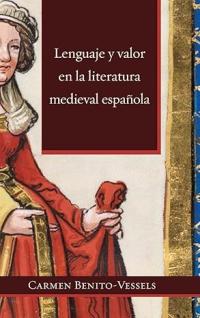
book cover of cbenito lenguaje y valor

Language and money function metaphorically in similar ways; therefore, we tend to accept or reject the value of a coin or the coining of a word for very similar reasons. Benito-Vessels presents an overview of language-value and money-value in several historical time periods and specifically focuses on the early appreciation of language as an instrument of power in five medieval Spanish texts: Cantar de mio Cid, Bocados de oro, Tractado de amores de Arnalte y Lucenda, Sergas de Esplandián and Estoria de España. Through a close reading of these and other medieval and contemporary texts, the author demonstrates that the name of Beatriz de Suabia was considered of such value that it was misused as currency. Carmen Benito-Vessels is a Professor of Medieval Studies and History of the Spanish Language at the University of Maryland. She earned her M.A. in Romance Philology at the University of Salamanca (1977), she pursued postgraduate studies at the University of Lisbon (1977-79) and obtained her Ph.D. at the University of California-Santa Barbara (1988). Benito-Vessels is "Miembro Colaborador" of the North American Academy of the Spanish Language and she is the author and editor of several books and numerous articles, including: Juan Manuel: Escritura y recreación de la historia (1994); Women at Work in Spain. From the Middle Ages to Early Modern Times (1998); and La palabra en el tiempo de las letras. Una historia heterodoxa (2007).

Read More about Lenguaje y Valor En La Literatura Medieval Espanola

Spectres d’une guerre au(x) récit(s) perdu(s): Littoral (1999), Visage retrouvé (2002) et Incendies (2003) de Wajdi Mouawad

This article focuses on three of Wajdi Mouawad's works. By highlighting the central role of specters and graves, it shows how, through theater, storytelling, and writing, Mouawad seeks to confront the war.

School of Languages, Literatures, and Cultures

Author/Lead: Marilyn Matar
Dates:
Wajdi Mouawad's works are haunted by the war that devastated his native Lebanon, and by his subsequent exile. This article focuses on Littoral (1999), Visage retrouvé ( 2002) and Incendies (2003). By highlighting the central role of specters and graves, it argues that the burial of the dead is a quest for a long-lost past, a means to reclaim a piece of oneself and rebuild memory and history alike. Furthermore, it shows how Mouawad seeks, through theater, storytelling, and writing, to confront both the war, and the lack of a story about the war, the past, and origins.

Contemporary French & Francophone Studies, Dec. 2014, Vol. 18, Issue 5

Keywords: War; Narrative; Burial of the Dead; Specters; Storytelling; Theater

Ética celestial y otros relatos entreverados

Introductory critical essay on contemporary Spanish short fiction and ethical narrative.

School of Languages, Literatures, and Cultures

Author/Lead: José María Naharro-Calderón
Non-ARHU Contributor(s):

Juan José Gómez Ordoño

José María Naharro-Calderón

Dates: -
Publisher: Madrid: Fondo de Cultura Económica, 2014. 163 p. ISBN 978-84-375-0716-3

This volume includes a scholarly introductory essay analyzing Juan José Gómez Ordoño’s short stories, focusing on ethics, narrative form, and historical reflection in contemporary Spanish literature.

Masculinity and Queer Desire in Spanish Enlightenment Literature

This monograph analyzes journalistic essays, poetry, and drama in order to show that Spanish authors employed satirical images of unconventional men to shape the national dialog on gender and sexuality.

School of Languages, Literatures, and Cultures

Author/Lead: Mehl Penrose
Dates: -
Publisher: Ashgate

This book is the first monograph wholly devoted to the subject of non-normative masculine gender and male sexuality in Enlightenment Spain. It analyzes journalistic essays, poetry, and drama in order to show that Spanish authors employed satirical images of unconventional men to shape the national dialog on gender and sexuality. The first half of the book is devoted to studying the gendered and sexual problematic of the "petimetre," an effeminate, Francophile male stock character who figured a failed masculinity, a dubious sexuality, and an invasive French cultural presence in Spain. The study counters traditional scholarship on this figure, which has argued that the "petimetre" was a trope configured to assuage anxieties resulting only from gender-related issues, by positing that the character was also created to address concerns about sexuality. The second half of the book examines same-sex male desire, love, and erotica and argues that the "bujarrón," a man who had sexual relations with men, was normally portrayed in cultural discourse as a foreigner or clergyman as a tactical maneuver designed to heighten xenophobia and undermine Church power. The second part also re-evaluates the scholarly position on male relationships in pastoral poetry, maintaining that rather than depicting just friendships, some of the poetry evinced homoerotic desire and imitated Virgilian verse in style and theme. This study argues that it is within the Enlightenment rather than the post-Enlightenment period that modern day notions of masculine gender and sexuality were embedded into the fabric of Spanish society.

À la croisée des chemins, il peut y avoir l’autre: lecture croisée de Littoral de Wajdi Mouawad, Palestine de Hubert Haddad et Les Versets du pardon de Myriam Antaki

This article proposes a comparative reading of the following works: Tideline (1999) by Wajdi Mouawad, Palestine (2007) by Hubert Haddad, and Verses of Forgiveness (1999) by Myriam Antaki.

School of Languages, Literatures, and Cultures

Author/Lead: Marilyn Matar
Dates:
« A la croisée des chemins, il peut y avoir l'autre » ("At the crossroads, we might meet the Other") is a comparative reading of the following works: Tideline (1999) by Wajdi Mouawad, Palestine (2007) by Hubert Haddad, and Verses of Forgiveness (1999) by Myriam Antaki. The works of these authors originated in the same region, the Mashrek (Middle East), and all carry the wounds of its geographical and identity conflicts. The Tideline, a space conducive to separation as well as reunion serves as a metaphor through which these works are analyzed. The paper demonstrates how these works are not only about a quest of the self, but also, more importantly, a pathway to the Other. It focuses on the essential place of literature in this region divided by identity conflicts and wars by demonstrating how literature becomes the space where these identities are best situated and described. Literature allows for a multiplicity of points of view that help bypass the confines of subjectivity and uniformity and best answer the question of identity in this region by including the point of view of the Other.

Contemporary French & Francophone Studies, Dec2013, Vol. 17, Issue 5

El Paraíso incendiado. La Almohada de arena. Versos del maquis

Critical introduction to poetry of exile and political resistance after the Spanish Civil War.

School of Languages, Literatures, and Cultures

Author/Lead: José María Naharro-Calderón
Non-ARHU Contributor(s):

Celso Amieva

Dates:
Publisher: Llanes: El Oriente de Asturias, 2011. 266 p. ISBN 978-84-87028-37-3 [Introductory essay on Celso Amieva’s poetry: p. 9-44].

Edited poetry collection by Celso Amieva, featuring an extensive scholarly introductory essay that contextualizes the poet’s work within exile literature, anti-Franco resistance, and historical memory.

Manuscrito cuervo: historia de Jacobo

Scholarly epilogue on exile, concentration camps, and memory in Max Aub’s narrative.

School of Languages, Literatures, and Cultures, Spanish and Portuguese

Author/Lead: José María Naharro-Calderón
Non-ARHU Contributor(s):

José Antonio Pérez Bowie

Max Aub

Dates:
Publisher: Segorbe: Fundación Max Aub-Universidad de Alcalá, 1999. 257 p. ISBN 84-923858-5-5

This volume includes a major scholarly epilogue examining the evolution, historical context, and testimonial dimensions of Max Aub’s Manuscrito cuervo, with particular attention to exile, internment, and memory.

Negotiation and confirmation of arrangements in Japanese business discourse

Yotsukura analyzes the rhetorical strategies adopted by L1 speakers when negotiating and confirming arrangements in spoken Japanese institutional discourse in order to provide models of this genre for L2 learners.

School of Languages, Literatures, and Cultures

Dates:
Publisher: American Association of Teachers of Japanese
This paper analyzes the rhetorical strategies adopted by L1 speakers when negotiating and confirming arrangements in spoken Japanese institutional discourse. Previous research on language socialization (Ochs 1993), interactional expectations (Clyne 1996, Hohenstein 2005, Sugita 2004), genre knowledge (Berkenkotter and Huckin 1995, Mayes 2003) and L2 acquisition of Japanese discourse genres (Mayes 2003, Yoshimi 2008, Yotsukura 2005, 2008) has shown that L2 performance is influenced by L1 social and discourse-based identities and learners' familiarity with L1 interactional and rhetorical resources used to index a variety of discursive stances. Many of these recent studies have argued that L2 learners can benefit from genre-based instruction that illustrates situationally appropriate rhetorical strategies, including evidential markers of epistemic stance and politeness considerations. The data consist of excerpts from naturally occurring spoken conversations collected from a commercial site in Kansai, Japan. Of particular analytical interest are interactions in which complications arise and arrangements must consequently be renegotiated. The data demonstrate that reaching a consensus can involve extensive negotiation between the two speakers and the use of mitigating strategies to avert the potential face threats inherent in correcting an addressee's perception of a given situation. Common strategies utilized by participants are identified with an eye to introducing them in the L2 classroom through a genre-based approach.

Read More about Negotiation and confirmation of arrangements in Japanese business discourse

Geografía vs. Geopolítica: las Islas Canarias, América, África

The proximity of the Canary Islands to Africa determined in many ways how identity politics in the early modern period played out in a historiography that had to joggle geography, geopolitics and coloniality.

School of Languages, Literatures, and Cultures

Author/Lead: Eyda M. Merediz
Dates:
El ilustrado historiador canario José de Viera y Clavijo se queja en el siglo XVIII de que las Islas Canarias hayan sido identificadas mayormente con América y hace un llamado a resituarlas, como corresponde a su proximidad, en África. En efecto, una serie de trabajos historiográficos, literarios y cartográficos de la temprana modernidad, al igual que un gran número de evaluaciones críticas más contemporáneas han enfatizado el papel histórico de Canarias en la carrera de Indias que las han dejado por lo tanto de espaldas a África. Este trabajo propone hacer un rastreo de este juego de localizaciones coloniales que responde a estrategias geopolíticas imperiales; estas evitan la identificación con el África musulmana o el África negra para por último reclamar que Las Canarias sí son África, siempre y cuando África sea la mítica Atlantis. Por ultimo, se explorará lo que estas construcciones literarias significan para el campo de los llamados estudios transatlánticos.

Estudios coloniales latinoamericanos en el siglo XXI: Nuevos itinerarios. Ed. Stephanie Kirk. Pittsburgh: IILI.

