

Skip to main content

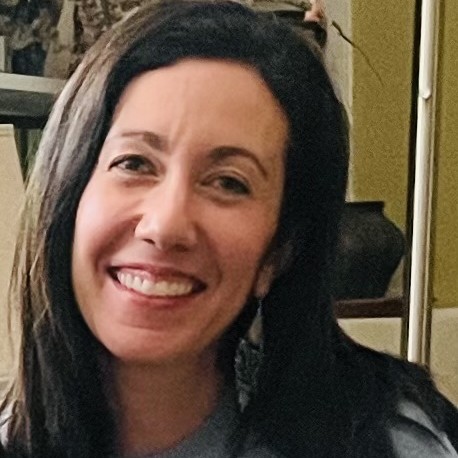
Avital Karpman

sllc headshot karpman

Associate Clinical Professor, Joseph and Rebecca Meyerhoff Program and Center for Jewish Studies
School of Languages, Literatures, and Cultures
Director, Hebrew Language Program, Hebrew
Joseph and Alma Gildenhorn Institute for Israel Studies

Dr. Avital Karpman is the director of the Hebrew program and has been teaching at UMD since 2007. She received her Ph.D. in Education from York University. Dr. Karpman is the author of Kisharim: A Textbook for Advanced Learners of Hebrew (2014) and Who Does This Language Belong To? Personal Narratives of Language Claim and Identity (2008). Recently, she was awarded an Andrew Mellon grant to develop materials for online teaching of less commonly taught languages (2018-2020) as well as a grant from the Consortium for Applied Studies in Jewish Education to research Hebrew teaching in public and charter schools (2018-2019).


Publications

Hebrew learning in American public schools: An under-the-radar educational experience and resource

An article about data collection from all public and charter Hebrew school programs in the U.S.

School of Languages, Literatures, and Cultures

Author/Lead: Avital Karpman
Non-ARHU Contributor(s): Sharon Avni
Dates:
One site of Hebrew study has been virtually ignored by stakeholders in the enterprise: Hebrew language programs at American public schools. Despite the fact that these programs exist – and in many cases are expanding and thriving – they remain a virtual black box in Jewish educational research, and are often disconnected from broader Jewish communal and institutional structures. We contend, on the other hand, that Hebrew language instruction, even in public schools, has implications for Jewish education.

Read More about Hebrew learning in American public schools: An under-the-radar educational experience and resource

Mapping Hebrew education: A resource for Jewish educators. Report for The Consortium for Applied Studies in Jewish Education

A report on the state of public and charter Hebrew education in the U.S.

School of Languages, Literatures, and Cultures

Author/Lead: Avital Karpman
Non-ARHU Contributor(s): Sharon Avni
Dates:
In the past decade, there has been a resurgence in the study of Hebrew in traditional andcharterpublicschools. However, the types of schools teaching Hebrew and the demographics of students studying Hebrew do not resemble those of earlier iterations of public school Hebrew programs that trace back to the early 20th century. Although the majority of Hebrew programs still disproportionately serve Jewish students, many schools in urban and suburban districts across the country are teaching Hebrew to students from diverse racial, religious, linguistic, and ethnic backgrounds. This project set out to take measure of these programs and provide some baseline information about Hebrew teaching in public schools in 2018 by investigating their demographics, instructional approaches, and language learning objectives.

Read More about Mapping Hebrew education: A resource for Jewish educators. Report for The Consortium for Applied Studies in Jewish Education

Implications of heritage language research for Hebrew teaching and learning

This literature review is the first in a series commissioned by CASJE. These reviews explore the implications and applications to the teaching and learning of Hebrew of recent research in heritage, second, and foreign language learning.

School of Languages, Literatures, and Cultures

Author/Lead: Avital Karpman
Dates:
For several decades, researchers have studied the field of heritage language (HL) teaching and learning. The intention of this review is to analyze these studies in order to find broader and more specific applications to inform the current situation in the Hebrew class. These ap- plications are limited for several reasons. First, virtually all HL studies focus on the children of immigrants who speak or are learning the new region’s majority language while attempting to preserve their HL (usually their home language). Most young American Hebrew learners, apart from a number of children of Israeli immigrants, speak English as their home and first language (L1). Second, though prior studies of HL learning are numerous, the research usually consists of qualitative case studies focusing on one aspect of learning (for example, attitudes toward the teacher, reactions to class activities, or parental influences on learning). There is very little in-depth analysis or connection of results and implications. Third, “He- brew” is an umbrella term1 that includes biblical, liturgical, literary, modern and other genres and uses of the language and that can be meaningful for social, communal, reli- gious, affective, nostalgic, nationalistic, and instrumental reasons. It is difficult to pinpoint which Hebrew we can study and compare to other HLs.

Read More about Implications of heritage language research for Hebrew teaching and learning

Service & Outreach

Re-imagining The Future Of Hebrew In America

Mapping Hebrew language programs in charter and public schools in the U.S.

School of Languages, Literatures, and Cultures | Hebrew

Author/Lead: Avital Karpman
Non-ARHU Contributor(s): Sharon Avni, CUNY
Dates:

Avital Karpman, Hebbrew Program Director, was an invited speaker for a virtual conversation on "Re-imagining The Future Of Hebrew In America," with Sharon Avni, Professor, BMCC. The event was sponsored by CASJE (Collaborative for Applied Studies in Jewish Education).


Read More about Re-imagining The Future Of Hebrew In America

Talk

Re-imagining The Future Of Hebrew In America

Mapping Hebrew language programs in charter and public schools in the U.S.

School of Languages, Literatures, and Cultures | Hebrew

Author/Lead: Avital Karpman
Non-ARHU Contributor(s): Sharon Avni, CUNY
Dates:

Avital Karpman, Hebbrew Program Director, was an invited speaker for a virtual conversation on "Re-imagining The Future Of Hebrew In America," with Sharon Avni, Professor, BMCC. The event was sponsored by CASJE (Collaborative for Applied Studies in Jewish Education).


Read More about Re-imagining The Future Of Hebrew In America