Giuseppe Falvo

School of Languages, Literatures, and Cultures
Program Director and Associate Professor, Romance Languages, Italian
gfalvo@umd.edu
4106 Jiménez Hall
Get Directions
Research Expertise
Italian
Renaissance
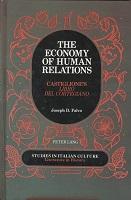
Joseph D. Falvo received his Ph.D. in Italian from the Johns Hopkins University in 1986 with a specialization in the Italian Renaissance. He has published numerous articles on Dante, Boccaccio, Machiavelli, Della Casa and a book on Baldesar Castiglione entitled The Economy of Human Relations. Castiglione's "Libro del Cortegiano" (Peter Lang, 1992). He recently contributed with entries on humanist writers to the six volume Encyclopedia of the Renaissance (1999) published by Charles Scribner's Sons in association with the Renaissance Society of America. He is currently working on a second book entitled Tradition and Innovation in Courtesy Literature: Education and Politics in Early Modern Italy, and on another project dealing with the study of ceremony and ritual in Boccaccio's Decameron. He has been a participant at many conferences and colloquia, delivering papers on various aspects of Italian literature and culture, including the Italian cinema. He is recipient of several honors, including an award from the Folger Institute, and the National Endowment for the Humanities.
Publications
The Art of Human Composition in Giovanni Pontano's De principe liber
A comparative study of Leon Battista Alberti's Della pittura and Giovanni Pontano's De principe liber.
Author/Lead: Giuseppe FalvoRead More about The Art of Human Composition in Giovanni Pontano's De principe liber
Ethics and Politics in Medicean Florence: from the De principe to the De optimo cive of Bartolomeo Sacchi.
A comparative study of Bartolomeo Sacchi's De principe (1471) and the De optimo cive (1474) in light of lesser known treatises on the virtue of magnificentia.
Author/Lead: Giuseppe FalvoThe Economy of Human Relations: Castiglione's Libro del Cortegiano
This book offers a modern critical approach to the study of Baldesar Castiglione's Libro del Cortegiano.
Author/Lead: Giuseppe Falvo